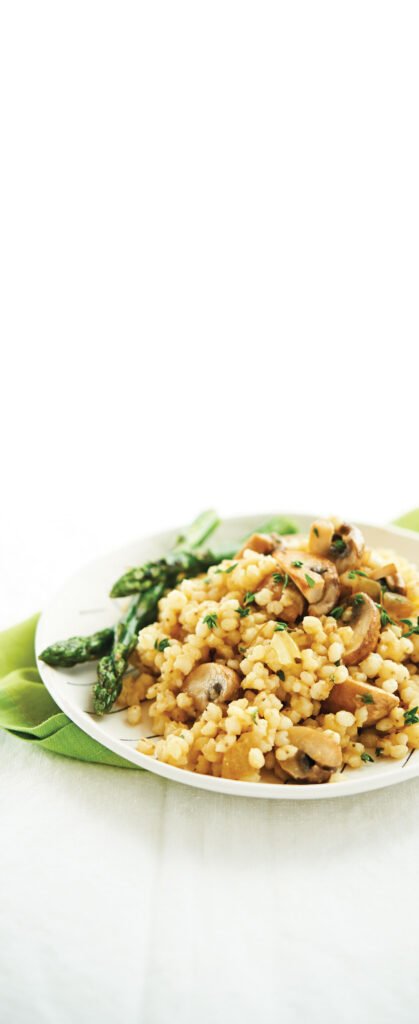
Sorghum (Sorghum bicolor) is a gluten free ancient grain that originated in Africa and is currently grown in many regions around the world. Sorghum is an ideal grain for the Kansas plains as it is drought tolerant and requires fewer nutrients in the soil to thrive compared to the other grains. Sorghum is a naturally gluten free grain and is ideal for consumption by individuals who live with celiac disease, gluten intolerance, or gluten sensitivity. Sorghum is high in insoluble dietary fiber and is an ideal whole grain to add to any diet.
Sorghum is the fifth most important cereal crop in the world after wheat, rice, corn and barley. Whole grain sorghum contains all three parts of the grain: bran, germ and endosperm. Consumers are becoming increasingly aware and educated about the benefits of including whole grains into their daily diets. Sorghum can be popped like popcorn, cooked in soups or pastas, ground into gluten free flour or even brewed into beer.
In regions of the southern United States, varietes of sweet sorghum are used to create sorghum syrup that is often referred to as “sorghum.” Sorghum syrup has a sweet molasses-like flavor and is delicious on pancakes or biscuits.
Pearling is the process of removing the bran (outer coating) and some of the germ from the sorghum kernel. This allows for faster cooking times and a product containing a higher level of starch (which is great for baking certain types of products like cakes). Our pearled sorghum grain is an excellent alternative to white rice or couscous.
YES! All Ori Sorgho Market products are Certified Gluten-Free by the Gluten-Free Certification Organization. You can spot the GFCO symbol on all of our packaging!
Want more information? Check out http://www.gfco.org/
Gluten is a term for protein that is found in wheat, rye and barley. Protein fractions in these grains can cause illness in individuals with celiac disease, gluten intolerance and gluten sensitivity.
Celiac disease is a lifelong genetic autoimmune condition that can affect children and adults. When someone with celiac disease eats food that contains gluten, it creates an immune-mediated toxic reaction that causes damage to the small intestine and does not allow food to be properly absorbed. If you would like more information on celiac disease or gluten intolerance, please check out the Gluten Intolerance Group of North America’s website at http://www.gluten.net/.
Of course! Whole grain sorghum flour is excellent to add into any traditional recipe if you are interested in adding additional dietary fiber and whole grain flavor. Try substituting 10-20% whole grain sorghum flour in for whole-wheat flour in your favorite recipes and see what works best in each recipe.
All of our Gluten-Free sorghums are grown by local farmers in Kansas. They all follow the strict protocol of our Farm to Family Food Safety Program. The sunflower kernels used in our Sun Lite Spread are also grown within the United States.
Be sure to check the “Best Used By” date on each package. Our flours will remain fresh if kept in a sealed container ideally in the refrigerator or freezer for up to a year.
Since we produce all of our sorghum through our Farm to Family Food Safety Program, we can assure you with complete confidence that our sorghum varieties are not genetically modified.
We have a dedicated soy free facility and all of our products do not contain soy as an ingredient.
Yes, all of our products are peanut free. We have dedicated production facility and test to validate that our products are safe for our customers with peanut allergies.
No, we do not use oats in any of our products or in our facility.
Sorghum varieties have a wide range of colors. In the United States, white sorghum has traditionally been used for food, however black, red, burgundy and yellow sorghum varieties also exist.
Black sorghum flour is a great choice for creating chocolate flavored baked goods, whole grain breads, and can be used as a natural dark color in bakery items. Black sorghum also contains high levels of antioxidants and 3-deoxyanthocianins. To find out more about the science behind black sorghum, please look at our research page.
Our burgundy, black and sumac sorghum varieties contain high level of antioxidants, however our white and pearled sorghum varieties do not have significantly high levels.